Bradford pear trees often split during Nashville storms because their branch structure can create weak attachment points. Narrow branch unions and included bark can make major limbs more vulnerable to breaking under strong winds, heavy rain, or ice. As the trees mature, their branches grow heavier, increasing the potential for structural failure.
Middle Tennessee’s changing weather can put these weaknesses to the test. Regular inspections and appropriate pruning may help identify structural problems before they lead to significant damage. However, mature Bradford pears with serious cracks or previous limb failures may need professional assessment to determine whether support or removal is the safer option.
The Weak Structure Behind a Bradford Pear
Bradford pear trees were widely planted for their symmetrical shape and showy white spring flowers. However, their branch structure can become a significant weakness as they mature.
Many Bradford pears develop multiple upright limbs with narrow, V-shaped unions. These unions can trap bark between adjoining stems, a condition known as included bark. Because the bark becomes embedded between the stems, the attachment may be weaker than a union with a well-formed branch connection.
As the tree grows, the stems increase in size and place additional stress on these joints. Heavy limbs and a dense canopy can increase the leverage acting on weak attachments, making them more susceptible to splitting during storms.
The problem may not be obvious when the tree looks healthy. Leaves can remain green and the canopy can appear full even when the tree has structural weaknesses that deserve attention.
The Mississippi Forestry Commission’s Bradford pear guidance explains why these trees can develop problems and provides information on their management.
Why Nashville Weather Makes It Worse
Nashville experiences thunderstorms, strong winds, heavy rainfall, and occasional winter ice. These conditions can place considerable stress on trees with weak branch attachments.
Spring and summer storms can push against a full canopy. Leaves catch the wind, and long limbs can move under pressure. If a major branch has a weak connection to the trunk, that movement may contribute to cracking or breakage.
Winter weather presents a different challenge. Ice and wet snow add weight to branches, increasing the load on already vulnerable unions. A limb that withstands ordinary weather may fail when ice accumulates.
Heavy rainfall can also saturate the soil and affect tree stability, particularly when roots are compromised or the tree has existing structural problems. Soil conditions vary across Davidson and Williamson counties, so root-related risks should be assessed individually rather than assumed for every property.
Repeated Storms Matter Too
A tree can sustain damage without losing a major limb immediately. Small cracks, damaged attachments, and broken branches may leave it more vulnerable to future weather.
A later storm may cause additional damage, even if the winds are less severe than those in an earlier event. That is why homeowners should inspect trees after storms and pay attention to new cracks, hanging limbs, or changes in the tree’s position.
If you suspect structural damage, avoid standing beneath the affected branches. A qualified tree care professional can assess the tree and recommend an appropriate next step.
Warning Signs Your Bradford Pear Is About to Split
You may notice signs of structural weakness before a major failure, although no single symptom can predict exactly when a tree will split. Inspect your Bradford pear from a safe distance and look for the following warning signs:
- Cracks where major stems meet: Visible cracks near a branch union may indicate structural weakness.
- Included bark: Bark trapped between two stems can create a weak attachment.
- Multiple dominant trunks: Two or more large stems of similar size may compete for space and develop weak unions.
- Sagging or damaged limbs: Branches that have changed position or developed fresh cracks need attention.
- Dead branches or thinning foliage: These symptoms can indicate declining health, although they may have several causes.
- Cavities, decay, or fungal growth: These signs may indicate damage or decay that needs professional evaluation.
- Previous limb failure: A tree that has already lost a large limb may have similar weaknesses in its remaining branches.
A Bradford pear that has already split deserves particular caution. Other limbs may have similar attachment problems, and the remaining structure may be unstable. Keep people and pets away from the affected area until the tree has been assessed.
Can a Bradford Pear Be Saved?
Sometimes. The best option depends on the tree’s age, condition, structural defects, location, and the potential consequences of failure.
Young Bradford pears may benefit from structural pruning that reduces competing leaders and encourages better branch development. Pruning should be planned carefully because excessive cutting can damage the tree or encourage weak regrowth.
Mature trees require a more detailed assessment. Selective pruning may reduce the weight of certain branches, but it cannot eliminate every structural weakness. Large cuts may also create additional problems if they remove too much of the canopy.
When Tree Cabling and Bracing May Help
For some trees with structural weaknesses, professional tree cabling and bracing may provide additional support. These systems can help limit movement or support vulnerable limbs when an arborist determines that the tree is a suitable candidate.
Cabling does not repair included bark or guarantee that a branch will never fail. Support systems require appropriate installation, periodic inspection, and maintenance. They may not be suitable for trees with severe decay, extensive cracking, or damage that compromises the main trunk.
If you are unsure whether a Bradford pear can be retained, arborist consulting services can help you evaluate the tree’s condition and understand the options before deciding on major work.
When Removal Is the Smarter Call
A Bradford pear may need removal if it has a severe split, extensive structural damage, substantial decay, or major limbs that threaten nearby structures. Removal may also be appropriate when an arborist determines that the risks cannot be managed adequately through pruning or support.
The decision should consider the tree’s condition and what lies within its potential fall zone. A damaged tree near a house, driveway, sidewalk, or neighboring property may present greater consequences if it fails.
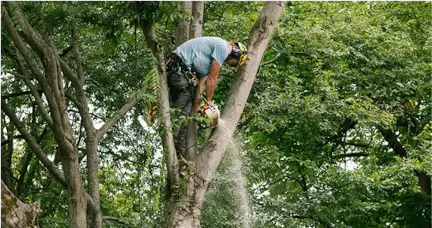
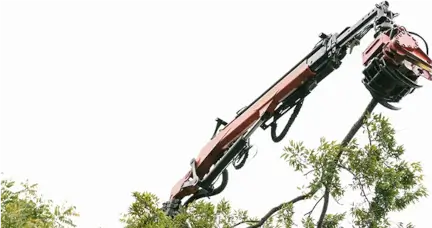
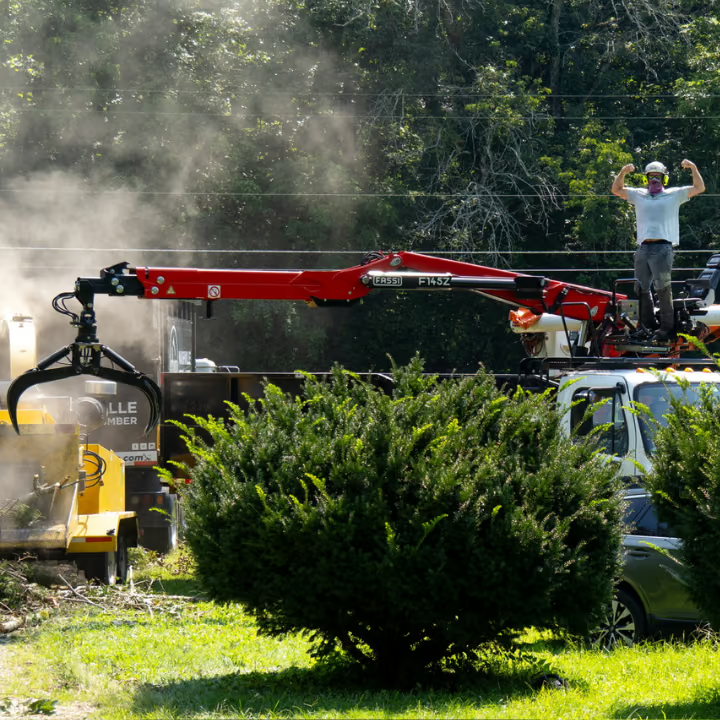
A planned removal allows a trained crew to assess access, select appropriate equipment, and lower branches in a controlled manner. Waiting until a tree fails during a storm can make the work more complicated and increase the risk of additional damage.
Bradford pears also raise environmental concerns. Callery pears can cross-pollinate with other varieties, producing fruit and seeds that birds disperse into natural areas. The Tennessee Invasive Plant Council lists Callery pear as an established invasive tree in Tennessee.
After removal, stump removal and grinding can clear the remaining stump and make the space easier to use for landscaping or a replacement tree.
What to Do After a Bradford Pear Splits
If a Bradford pear splits during a storm, put safety first. Damaged branches may remain suspended in the canopy, and the remaining trunk or limbs may fail without warning.
Follow these steps:
- Keep your distance. Keep people, pets, and vehicles away from the damaged tree and any hanging branches.
- Check for utility hazards. If a branch or tree has contacted a power line, stay away and contact the utility company or emergency services as appropriate.
- Document the damage safely. Take photographs from a safe distance if you need records for your insurer.
- Avoid cutting the tree yourself. Split wood can be under tension, and damaged limbs may move unexpectedly when cut.
- Arrange a professional assessment. A tree care professional can evaluate the damage and determine whether the tree can be stabilized or should be removed.
If a split tree threatens your home, blocks access, or has dangerous hanging limbs, contact an emergency tree service in Nashville. Do not approach a tree near a downed power line.
A damaged tree that remains standing may still be unstable. Do not assume that it is safe simply because it has not fallen completely.
Homeowner Habits That Raise the Risk
Certain yard practices can make tree problems worse or interfere with healthy growth. Avoid these common mistakes:
- Topping the canopy: Cutting back large branches indiscriminately can encourage weak regrowth and leave the tree more vulnerable to future damage.
- Over-pruning: Removing too much foliage can stress the tree and affect its structure.
- Damaging the trunk: Lawn equipment can injure bark near the base, creating openings for decay.
- Piling mulch against the trunk: Excess mulch can keep bark damp and contribute to other tree-health problems.
- Compacting the soil: Repeated vehicle traffic or construction near the root zone can affect root function.
- Ignoring new cracks: Visible damage at a major branch union deserves prompt attention.
Routine inspections can help identify developing problems. Late winter may make branch structure easier to see on deciduous trees, but hazardous cracks or hanging limbs should be assessed as soon as they are noticed, regardless of the season.
A reliable tree care company in Nashville, TN, can perform pruning and trimming to address selected branches and support good tree structure when the tree is a suitable candidate for pruning.
How Chop Nashville Helps Prevent Bradford Pear Storm Damage
Chop Nashville Tree Care helps homeowners identify and address structural concerns involving Bradford pears and other trees. Our team can assess cracked trunks, weak branch unions, storm-damaged limbs, and other signs of potential failure.
Depending on the tree’s condition, our recommendations may include selective pruning, cabling and bracing, further arborist assessment, or removal. We consider the tree’s structure, location, and potential risks to nearby buildings and other property when determining the appropriate approach.
When a tree has become hazardous or sustained severe storm damage, our team can discuss removal options and help homeowners understand the next steps. We also provide stump grinding to clear the area after removal.
If your Bradford pear has visible cracks, hanging limbs, or a history of major branch failures, do not wait for another storm to assess the risk.
Call Chop Nashville Tree Care at (629) 468-2960 to discuss your tree concerns and request a free estimate.
Frequently Asked Questions
Why do Bradford pears split so easily?
Bradford pears often develop narrow branch unions and included bark, which can weaken the attachment between stems. As the tree grows, heavy limbs and a dense canopy can increase stress on these unions. Strong winds, ice, and other storm conditions may then contribute to branch failure.
How long do Bradford pears last in Nashville?
Bradford pears can begin experiencing significant structural problems as they mature, sometimes within 15 to 25 years. However, the timing varies with growing conditions, tree structure, maintenance, and storm exposure. Age alone does not determine whether a particular tree is hazardous.
Can I fix a split Bradford pear?
Some trees with limited structural defects may benefit from pruning or cabling and bracing. However, a severe split, extensive decay, or a damaged main trunk may make removal the safer option. Have the tree assessed before attempting repairs.
Do I need a permit to remove a Bradford pear in Nashville?
Permit requirements can depend on the tree’s location, property type, and any applicable local restrictions. Trees in public rights of way or on properties subject to specific planning requirements may be treated differently from trees on private residential lots. Review the relevant Nashville tree removal laws and requirements before scheduling work.
What time of year is best to prune a Bradford pear tree?
Late winter is often a practical time for structural pruning because the bare canopy makes branch connections easier to inspect. However, damaged or hazardous limbs should be assessed promptly, regardless of the season. The appropriate timing also depends on the tree’s condition and the type of pruning required.
Can a Bradford pear split even if it looks healthy?
Yes. A tree may have weak branch attachments even when its leaves appear healthy. Included bark, poor branch structure, and heavy limbs can increase the risk of failure. Storms may expose these weaknesses suddenly, which is why structural inspections matter.
Should I remove a Bradford pear before the next storm?
Not every Bradford pear needs to be removed before storm season. However, a tree with visible cracks, previous major limb failures, significant decay, or other structural concerns should be evaluated by a qualified tree care professional. Depending on the findings, pruning, support, monitoring, or removal may be recommended.
What tree should I plant instead of a Bradford pear in Nashville?
Consider native trees suited to Middle Tennessee, such as white oak, American hornbeam, or serviceberry, depending on your available space and site conditions. Choose a species that fits the mature size, soil, sunlight, and moisture conditions of your yard. A locally knowledgeable tree professional or nursery can help you select an appropriate replacement.
Does Chop Nashville provide tree services in Belle Meade and Brentwood, TN?
Yes. Chop Nashville serves Nashville and nearby communities with tree removal, pruning and trimming, stump removal and grinding, emergency tree service, and other tree care services. Learn more about our tree services in Belle Meade, TN, and tree services in Brentwood, TN.