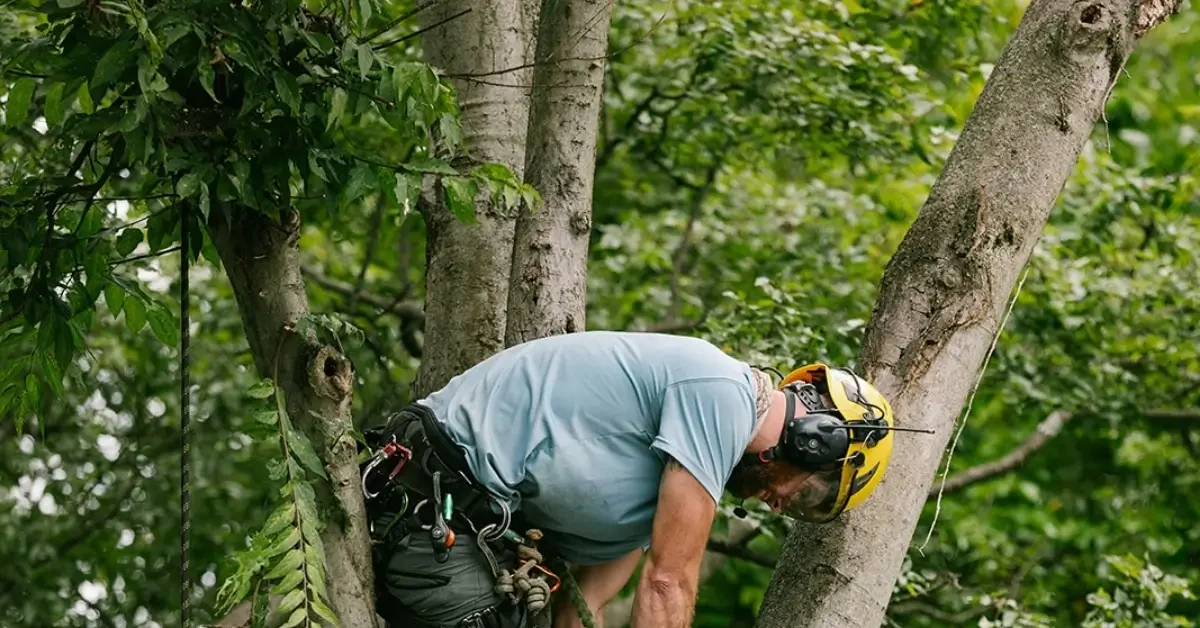
Getting a tree removed in Nashville starts with one question: what should a real estimate actually include? A fair quote covers the scope of work, the size and condition of every tree involved, access and equipment needs, disposal and stump grinding costs, and proof of insurance, not just a single dollar figure texted over after a quick look at a photo.
Most people don’t think about tree removal until a limb is hanging over the roof or a trunk is leaning the wrong way after a storm. That’s exactly the moment homeowners are most likely to get taken advantage of. Someone knocks on the door, quotes a number on the spot, and asks for cash before the truck leaves the driveway.
A real estimate looks nothing like that. Here’s what one should include, and what separates a fair quote from a rushed guess.
What Actually Drives the Price
No two trees cost the same to remove, and the reasons rarely make it into a homeowner’s mental math.
Size and species matter more than most people expect. A 30-foot ornamental pear comes down in an afternoon. A mature white oak with a 40-inch trunk near a power line is a different job entirely, with different equipment, a larger crew, and more risk to manage.
Access changes everything. A tree in an open backyard is straightforward. A tree wedged between a fence, a shed, and a neighbor’s driveway in East Nashville or a tight lot in 12South means the crew works around obstacles instead of through them, and that time shows up in the quote.
Condition and lean matter for safety, not just difficulty. A dead or storm-damaged tree often costs more to remove than a healthy one of the same size, because it has to come down in pieces rather than as a controlled fell.
Disposal and stump grinding are usually separate line items. Hauling debris and grinding a stump flush with the yard both take extra time and equipment. If a quote doesn’t mention either one, ask. It’s a common way estimates come in artificially low.
Permits apply in specific situations, not every job. Most tree removal on a single-family Davidson County property doesn’t require a Metro permit. Trees in the public right of way, protected or heritage trees, and anything tied to a subdivision’s landscape plan are the exceptions. A company that’s done this for a while flags it before work starts, not after. See our companion post on Nashville tree removal laws for the full breakdown.
Free Estimate vs. Paid Estimate
Most reputable tree companies in Nashville offer free, no-obligation estimates for standard residential jobs. An arborist or crew lead walks the property, looks at each tree, and puts together a written scope.
Complex jobs are different. If a project needs a written report from an ISA Certified Arborist for a hazard assessment, an insurance claim, or a dispute with a neighbor, that’s usually a separate, paid service, and it should be priced and explained upfront.
A phone quote based on a description, or a number pulled from a photo, is fine for a rough sense of scope. It isn’t a real estimate. Trunk diameter, canopy spread, and root condition are hard to judge without walking the site.
| Feature | In-Person Written Estimate | Phone or Photo Quote |
| Accuracy | High, based on an on-site inspection | Approximate, based on a description or photos |
| Scope of Work | Detailed, itemized written estimate | Usually a rough price with limited detail |
| Access & Safety Assessment | Includes access constraints, hazards, and equipment needs | Cannot accurately assess site conditions remotely |
| Equipment Planning | Identifies the equipment and crew required | Often based on assumptions |
| Best For | Comparing contractors and making a hiring decision | Getting a preliminary price range |
Expert Tip: Ask whether cleanup, stump grinding, and debris hauling are included before comparing prices side by side. Two quotes that look far apart are sometimes covering different scopes of work, not different prices for the same job.
What a Written Estimate Should Include
Before signing anything, a written estimate should cover:
- The exact scope: which trees, what work (full removal, trimming, stump grinding)
- Equipment needed and any access considerations
- Cleanup and haul away terms, including whether debris removal is included or extra
- Proof of licensing and liability and workers’ comp insurance
- A timeline, including what happens if weather pushes the date
- Payment terms and what triggers the final invoice
If any of these is missing, ask for it in writing before the crew shows up. A company that hesitates to put its insurance information on paper is telling you something.
Warning Signs to Watch for Before Hiring a Tree Service
A few patterns show up again and again after a bad storm rolls through Nashville:
- Door-to-door “storm chasers” who show up unannounced right after severe weather and pressure for a same-day, cash-only deal
- No proof of insurance, or a vague answer when asked directly
- A quote with no scope attached, just a number with no explanation of what it covers
- Upfront payment in full, before any work has started
- Prices dramatically lower than every other quote, with no explanation for the gap
None of these alone means a scam. Together, they’re the exact pattern that leaves homeowners with a stump-covered yard, a damaged fence, and no one answering the phone. You can verify a company’s standing with the Tennessee Secretary of State business search before hiring.
What Experience Looks Like on the Ground
A crew that works Davidson County regularly has seen the full range, from a routine backyard removal to a crane-assisted job on a tight urban lot in Germantown or Wedgewood-Houston. That experience shows up in small ways during an estimate: knowing which trees near a foundation need root inspection before a price is set, flagging a power line clearance issue before it becomes a mid-job delay, or recognizing when a stump is going to fight the grinder longer than expected. A crew that’s walked hundreds of Nashville yards tends to ask sharper questions during the walkthrough, not just quote off the trunk diameter.
Questions Worth Asking Before Hiring
- Are you licensed and insured, and can I see proof?
- Who’s doing the work, your own crew or a subcontractor?
- What’s included in this price, and what would cost extra?
- How do you handle unexpected complications, like a tree that’s more rotted than it looked?
- What happens to the debris and the stump?
A company confident in its process answers all five without hesitation.
Frequently Asked Questions
Does Chop Nashville charge for estimates?
Standard residential tree removal and trimming estimates are free. An arborist or crew lead walks the property and provides a written scope before any work begins.
How long does a tree removal estimate take?
For most residential jobs, an on-site walkthrough takes 20 to 30 minutes. Complex jobs, including multiple trees, tight access, or a hazard assessment, may take longer.
Do I need a permit to remove a tree at my Nashville home?
Most single-family and duplex property owners don’t need a Metro permit to remove a tree on their own land. Exceptions include trees in the public right of way and protected or heritage trees tied to a site or landscape plan. See our post on Nashville tree removal laws for the full breakdown.
What’s the difference between a free estimate and an arborist report?
A free estimate covers scope and price for the work itself. An arborist report is a formal, paid written assessment used for insurance claims, hazard documentation, or legal disputes.
Why do tree removal quotes vary so much between companies?
Quotes usually vary because they cover different scopes, not because one company is charging more for the same job. Stump grinding, debris hauling, and equipment access can each be included or excluded, so it’s worth confirming the scope before comparing numbers.
Can I get multiple estimates before deciding?
Yes, and it’s a good idea. Getting two or three written estimates for a larger or more complex job makes it easier to compare scope, not just price, and to spot a quote that’s an outlier for a reason worth asking about.
What should I do if a tree company won’t put anything in writing?
Treat it as a red flag. A company confident in its pricing and process has no reason to avoid a written scope, and a verbal-only quote leaves you with nothing to point to if the job doesn’t go as described.
Protect Your Project Before Problems Start
A good tree removal estimate should be based on the specific tree in front of you, not a rough number given over the phone. Make sure every estimate is provided in writing, ask exactly what’s included, and don’t let the urgency of storm damage pressure you into skipping important questions.
At Chop Nashville, we believe homeowners should have clear information before making a decision. Our written estimates explain the scope of work, what’s included, and any factors that could affect the project, so there are no surprises later. In the end, the best value usually isn’t the lowest quote. It’s the estimate that’s transparent, easy to understand, and backed by a team that’s willing to answer your questions before the work begins.