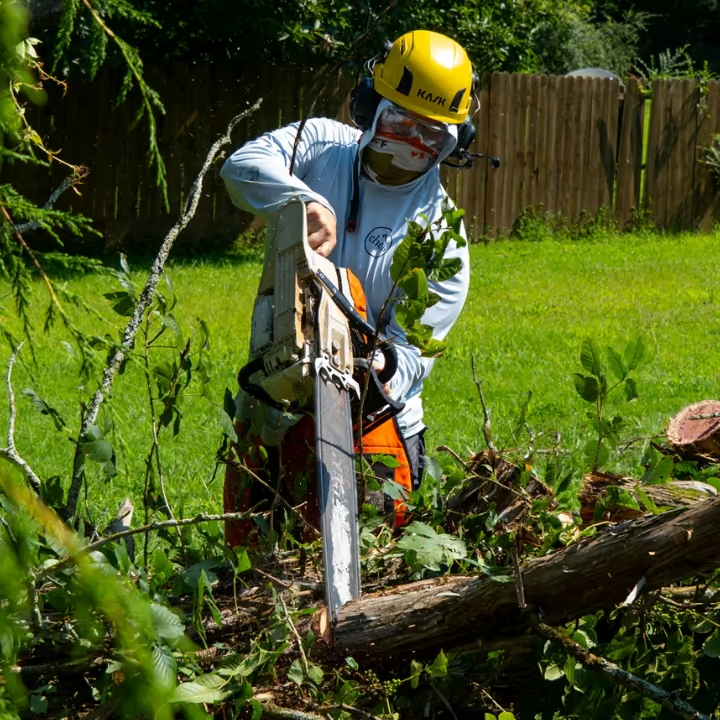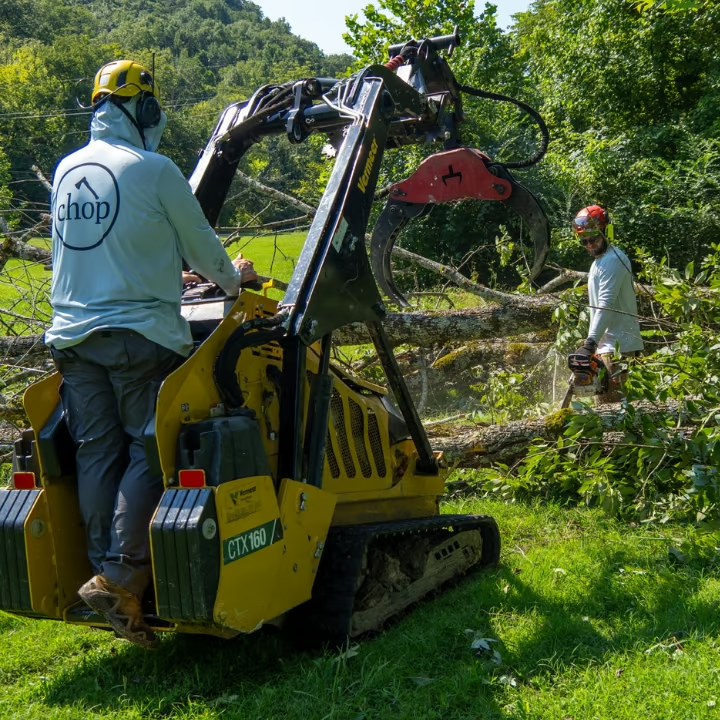
We provide tree risk assessment in Nashville, TN, through our arborist consulting service. At Chop Nashville, our team evaluates tree stability, health, and potential hazards to help you decide whether a tree needs care, monitoring, or removal. We explain the concerns we find and recommend work based on the tree and your property.
Call (629) 468-2960 to discuss a leaning tree, damaged branch, or another concern you want evaluated.
Tree Evaluations That Help You Make a Decision
Our tree evaluations examine structural concerns and tree health together, with attention to what a falling tree or branch could affect. We review branches, the trunk, visible roots, and the surrounding area. The purpose is to identify the problem and explain which steps can address it.
A tree risk assessment considers more than appearance. Green leaves do not resolve a concern about a cracked trunk, and one dead branch does not establish that the entire tree needs removal. We look at the condition in context before recommending a response.
The International Society of Arboriculture’s guidance on recognizing and managing tree risk describes options that include pruning, supplemental support, moving potential targets, and removal. A target is a person or object that could be struck. We discuss the options relevant to your tree and how you use the surrounding space.
Tree Concerns We Can Assess
We assess trees with visible damage, changes in growth, or signs that raise questions about stability. Our team can review a new concern after a storm or a longstanding issue you want explained before scheduling work. Describe what you noticed and when the change first appeared.
Contact us about:
- Cracks or splits in the trunk or major branches
- Large dead limbs or broken branches caught overhead
- A new lean or movement in the soil around the base
- Cavities, damaged bark, or fungal growth near the trunk
- Weak-looking connections between large stems
- Declining foliage or repeated branch dieback
- Roots affected by digging, paving, or changes in ground level
These signs do not all call for the same service. We assess the extent and location of the concern rather than recommending removal from a symptom alone. If a branch is hanging over an occupied area, call us promptly and keep people clear while arranging help.
Assessment Around Homes and Active Properties
We consider nearby buildings, vehicle access, and the places people regularly use when evaluating tree concerns. A damaged limb above a busy entrance presents a different situation from similar damage over an unused section of land. Tell our team about activity around the tree so we can account for it.
For a Nashville home, point out bedrooms, patios, play areas, garages, and frequently used paths beneath or beside the tree. On commercial or shared properties, identify parking spaces, customer entrances, and pedestrian routes. Let us know if the use of the area will change.
Sometimes moving a parked vehicle or outdoor seating can reduce exposure while a tree-care decision is being made. Buildings and utility lines cannot be moved in the same way. We consider those limits when discussing how to manage the concern.
Recommendations Based on the Evaluation
We recommend tree care according to the concern identified during the evaluation. Some trees need selected branches removed; others need monitoring, additional support, or removal. Our team explains what each proposed service is intended to address so you can review the recommendation before approving follow-up work.
| Finding or situation | Response we may discuss |
|---|---|
| A problem limited to particular branches | Selective pruning to address those branches |
| A structural weakness suitable for supplemental support | Cabling or bracing after evaluating the tree’s condition |
| A condition that warrants observation | Monitoring and advice about changes that need another review |
| Damage or instability that makes retention unsuitable | Removal and planning around nearby structures |
Our tree pruning and trimming service addresses selected dead, damaged, or weak branches. We also provide tree cabling and bracing for suitable structural concerns. Support hardware can help manage specific weaknesses, but it cannot guarantee that a tree or branch will never fail.
If removal is recommended, we explain why retaining the tree is unsuitable and discuss the removal scope separately. An assessment does not commit you to a particular tree service.
Tree Preservation Before Construction or Landscaping
We provide tree-preservation consulting for construction and renovation projects where existing trees may be affected. Our team identifies critical root zones and advises on protection before excavation or equipment access begins. The critical root zone is the root area essential to a tree’s health and stability.
Bring your proposed layout when planning an addition, driveway, patio, or other improvement near a tree you want to keep. We can discuss conflicts between the tree and planned work while changes to the layout are still possible. Tell us where equipment will travel and where materials may be stored.
ISA’s guidance on avoiding tree damage during construction explains that trenching, grading, paving, and soil compaction can damage roots. Construction effects may take years to appear. If work has already occurred near the tree, share that history during the consultation even if the foliage still looks normal.
Planning Care for Several Trees
We offer tree inventories for properties that need a broader view of tree condition and maintenance needs. An inventory records information such as species, size, location, condition, and potential hazards. Our team can use that information to discuss priorities across a residential, commercial, or shared property.
Let us know whether you need one concerning tree evaluated or a plan covering several trees. A focused consultation addresses a particular question. An inventory helps organize information across the site and supports longer-term maintenance decisions.
For property managers, identifying priorities can help separate work needing prompt attention from care that can be scheduled later. If you’re preparing to sell, our article on tree inventories before a property sale explains how a record of tree condition can support planning. Any documentation required for a transaction should be discussed before booking.
Work With Our Nashville Arborists
Our staff includes ISA Certified Arborists, and we provide both tree-preservation services and removal. That range allows us to discuss different responses to a tree concern. We explain our recommendations in plain language, including what the proposed work can address and what uncertainty remains after the evaluation.
Our office is at 219 Lafayette Street, Suite 200, Nashville, TN 37210. We work with homeowners, businesses, and property managers in Nashville and surrounding communities. You can also review our broader tree services in Nashville if your property needs care beyond the consultation.
Arrange the Right Consultation for Your Property
We arrange consultations around the tree concerns and decisions you need help with. Contact us with your Nashville address, the number of trees involved, and a short description of the problem. We’ll discuss access, consultation pricing, and any specific documentation you need before confirming the appointment.
Helpful information includes:
- Photos taken from a safe location
- When damage, leaning, or decline first appeared
- Previous pruning, storm damage, or construction near the tree
- Site plans for upcoming property improvements
- Requirements for a written report or other deliverable
If you need a report for an insurer, municipality, or another party, share its requirements at the start. We’ll confirm whether we can provide the requested format, assessor qualifications, and evaluation scope. Follow-up pruning, support installation, or removal can then be discussed and priced before you approve that work.
Urgent Tree Damage and Emergency Help
We provide 24/7 emergency tree service for fallen trees, hazardous limbs, and urgent storm damage. If a tree has fallen onto a structure or a broken limb threatens an occupied area, call (629) 468-2960 directly. Describe the immediate hazard so we can discuss the appropriate response.
Keep people away from unstable trees and hanging branches. If any part of the tree is touching utility lines, stay clear and contact the utility provider first. Do not move closer to photograph damage around wires.
Frequently Asked Questions About Tree Risk Assessment
Does a leaning tree always need removal?
No. We assess the lean along with the tree’s roots, trunk, condition, and surroundings. Tell us if the lean is new or has become more pronounced. A sudden change after a storm deserves prompt attention, particularly when the ground is lifting near the base.
Can a tree with green leaves still have structural problems?
Yes. Foliage condition does not answer every question about trunk strength, branch attachments, or root stability. We evaluate those concerns separately from leaf appearance. Let us know about cracks, old damage, or other changes even if the crown remains green.
Does a hollow trunk mean the tree must come down?
Not automatically. We need to assess the cavity, the surrounding tree structure, and what could be affected by failure. The presence of a hollow alone is not enough to choose the right response. Contact us to review the tree in person.
Can you evaluate damage after a storm?
Yes. We assess storm-related concerns and discuss care or removal options. If damage is creating an immediate hazard, call our emergency service rather than waiting for a routine consultation. Stay away from hanging branches and trees involving electrical lines.
Are photos enough to assess tree stability?
Photos help us understand your concern, but they cannot show every relevant feature or site condition. We use the consultation to examine the tree and surroundings. Take pictures only from a safe location; do not approach unstable material for a better view.
Can you assess a tree that already has cables installed?
Tell us about the existing support system when booking. We can discuss an evaluation of the tree and its structural concerns. The presence of cables does not establish that the tree is free of risk or that every weakness has been addressed.
Should I arrange an assessment before replacing my driveway?
Yes, if the work may affect nearby trees or their roots. Our preservation consulting can review the planned layout and discuss root-zone protection before excavation. Share the proposed driveway position, grading, and equipment access route with us.
Can you review several trees during the same project?
Yes. We provide consultations and tree inventories. Tell us how many trees are involved and whether you need specific concerns evaluated or broader information about the property. We’ll discuss the service scope that fits those needs.
Will I receive a written tree risk report?
Written findings, report format, and any third-party requirements need to be confirmed before booking. Send us the requested specifications so we can discuss what we can provide. Do not assume a particular report is included with a tree-work estimate.
How often should a concerning tree be reassessed?
The interval depends on the condition being monitored and changes around the tree. We can discuss follow-up when reviewing our findings. Contact us sooner if you notice new cracking, a changed lean, branch failure, or fresh disturbance near the roots.
Schedule a Tree Risk Assessment Consultation in Nashville
Call (629) 468-2960 or contact Chop Nashville about an arborist consultation. Tell our team which tree concerns you and the decision you need help making. We’ll discuss the evaluation, pricing, and any requested documentation before arranging your visit.