The direct fine for unauthorized tree removal in Nashville is low compared to other cities, reported at around $50 per violation, but that figure understates the real financial risk. The higher costs are mandatory repair or replacement to arboriculture standards, Metro Tree Bank contribution fees, a revised landscape plan, and project delays.
Ask most builders what happens if a protected tree dies on their site, and they picture a fine, a fixed dollar amount, a cost of doing business, something to budget around. That’s the wrong mental model, and it’s worth correcting before it costs a real project real money.
The Fine Itself Is Small. That’s Not the Point.
According to Nashville Tree Conservation Corps, a local tree advocacy organization that has publicly pushed for stronger enforcement, Nashville’s current fine for unauthorized tree removal sits around $50 per violation, a figure the group has specifically criticized as too low to change behavior. Fee schedules and ordinances get revised, so treat that number as directional, not gospel, and confirm the current figure with Metro Codes before you rely on it for a real project.
Here’s the part that actually matters. The ordinance also requires unauthorized removal or damage to be repaired or replaced according to accepted International Society of Arboriculture standards, and on a mature tree, that obligation is where the real cost lives, not in the citation itself.
What Actually Triggers a Violation
For most standalone single-family or duplex homeowners, this whole framework doesn’t apply. Metro’s landscape plan and tree preservation requirements are aimed at developments other than single-family or duplex residential properties. If that’s not your project, the situations that create real exposure are:
- Removing or damaging a tree in the public right of way without a permit from the Urban Forester
- Damaging or removing a protected, heritage, or retained tree tied to an approved landscape or site plan
- Grading before the required tree protection fencing has been inspected, which doesn’t just risk the trees; it triggers a mandatory revised landscape plan on its own, independent of whether any tree actually dies.
- A retained tree dying during construction, most often from equipment or material staging inside the root zone rather than direct removal
That last one is the one crews underestimate most. A tree doesn’t have to be cut down to violate the preservation requirement. It just has to not survive the project in genuinely healthy condition.
The Costs That Add Up Faster
Replacement and repair, to standard. If a protected tree is damaged or removed without authorization, the ordinance requires it be repaired or replaced according to ISA accepted practices, not just planted with something similar. On a mature tree, that can mean a far larger caliper replacement tree, or several replacement trees, to approximate the lost canopy.
Metro Tree Bank contributions. If a project can’t physically replant enough trees on site to meet its required density, Metro allows a contribution to the Tree Bank instead, a real, budgeted cost, not a rounding error.
A revised landscape plan. As covered in our companion post on the Urban Forestry inspection process, starting grading before the required pre-inspection means submitting a revised plan, a schedule delay that often costs more in lost time than any fine would.
Density shortfall exposure. If enough retained trees are lost that the site no longer meets its required tree density factor, closing that gap after the fact with mature trees instead of saplings is far more expensive than protecting the originals would have been.
Reputational cost for repeat builders. Metro’s Urban Forestry office works with the same developers and general contractors across multiple projects. A pattern of preservation failures on one site follows a builder into the plan review process on the next one.
| Cost Type | Fixed or Variable | Relative Size |
| Direct fine | Fixed, around $50 per violation | Small |
| Repair or replacement to ISA standard | Variable, scales with tree size | Often the highest single cost |
| Metro Tree Bank contribution | Variable, based on density shortfall | Moderate to large |
| Revised landscape plan and schedule delay | Variable, based on project timeline | Moderate to large, compounds with crew downtime |
| Reputational cost with Metro on future projects | Not billed directly | Hard to quantify, real over time |
Expert Tip: Walk the landscape plan with field crews before site work starts, not just the site superintendent. The people running the excavator are the ones most likely to be near a protected root zone, and a five-minute walkthrough prevents most accidental violations.
How to Actually Stay Compliant From Day One
Get the landscape plan and Tree Density Worksheet right before you submit. Identify which existing trees you’re counting toward density requirements early, and make sure they’re realistically protectable given your site plan. Don’t design around a tree you can’t actually keep alive through construction.
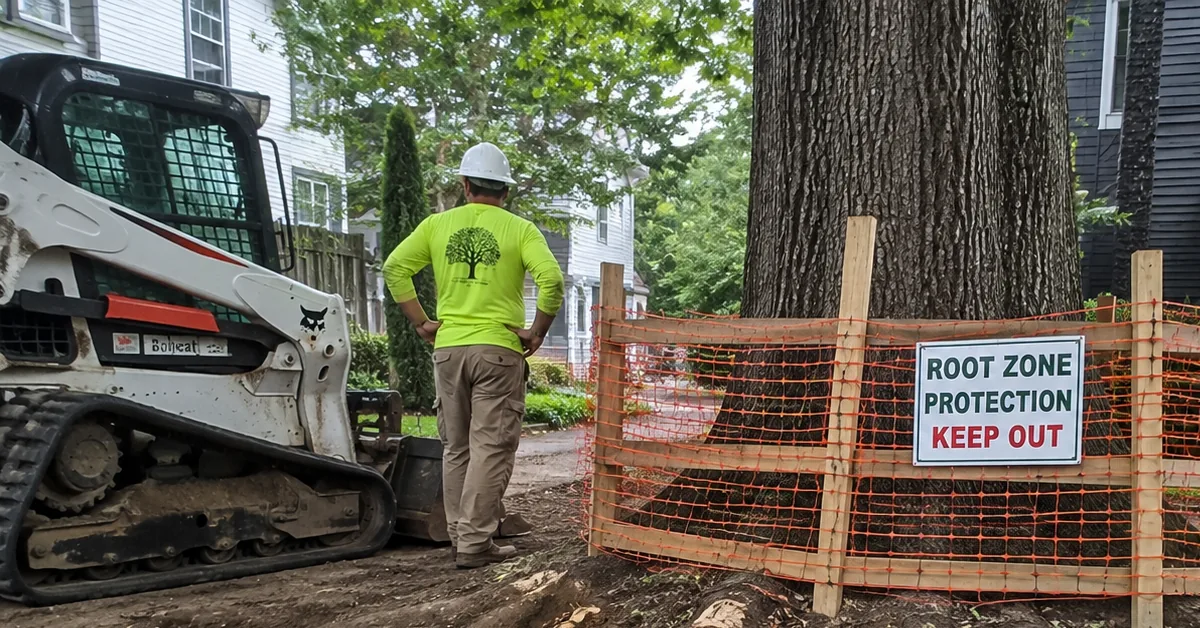
Install tree protection fencing before anyone touches the site, and call for the pre-grading inspection. This is the single highest leverage step in this entire process. It’s also the one skipped most often, usually because a crew is ready to move and the inspection feels like a delay, when skipping it is what actually causes the delay.
Treat the fenced root zone as off limits, not just off limits in theory. No staged materials, no parked equipment, no trenching through it. Compaction and root damage kill trees just as effectively as a chainsaw, and they don’t show symptoms until months later, well after the crew that caused it has moved to the next job.
Keep the fencing up for the entire build, not just the grading phase. A tree protected during excavation and then exposed during framing is exposed for the part of the project with the most foot traffic and material movement.
Loop in a licensed tree service or arborist before the plan is finalized, not after a tree is already struggling. A professional can flag which trees are realistically preservable given the grading plan, and which ones should be swapped for new plantings from the start. That’s a cheaper decision made early than a violation discovered late.
If a Tree Is Already Damaged
If a protected tree has already been damaged mid-project, the move is to document it immediately: photos, timeline, what caused it, and contact Urban Forestry proactively rather than waiting for an inspector to find it. Getting ahead of the issue with a proposed remediation plan already in hand is a meaningfully different conversation than being caught after the fact.
A typical violation workflow looks like this:
- Damage or unauthorized removal occurs, or is discovered during a site check.
- Document the tree’s condition immediately with photos, a timeline, and the likely cause.
- Contact Metro’s Urban Forestry Division proactively, ideally before an inspector finds it independently.
- Propose a remediation plan, replacement trees, repair work, or a Tree Bank contribution, rather than waiting to be told what’s required.
- Metro reviews the proposal and issues final repair, replacement, or contribution requirements, along with any applicable fine.
Crews that handle tree preservation on active Nashville job sites regularly help contractors work through exactly this sequence, and the projects that come out ahead are the ones that call before Metro has to come looking. A builder who flags a damaged tree the same week it happens, with a remediation plan already sketched out, tends to walk away with a far smaller list of requirements than one who waits for a final inspection to surface the problem.
Frequently Asked Questions
How much is the fine for unauthorized tree removal in Nashville?
Local tree advocacy sources report a current fine of around $50 per violation, though this figure has been publicly criticized as too low and ordinances can change. Confirm the current fee schedule directly with Metro Codes before budgeting around it. The fine is separate from, and usually smaller than, the required repair or replacement obligation.
What’s more expensive than the fine itself?
Almost always the mandatory repair or replacement requirement, potential Metro Tree Bank contribution fees if on site replanting can’t meet density requirements, and project delays from a revised landscape plan if grading started before the required inspection.
Does this apply to a single family home I’m building for myself?
Generally no. Metro’s landscape plan and tree preservation requirements apply to developments other than single family or duplex residential properties. If your project falls outside that framework, check our companion post on Nashville tree removal laws for what actually applies to you.
Can a tree die of construction even if no one removes it?
Yes. Root compaction from staged equipment or materials, or trenching through the critical root zone, can kill a tree months after construction without a single branch being cut, and it still counts as a preservation failure.
What should I do if a protected tree is already damaged?
Document it immediately with photos and a timeline, and contact Metro’s Urban Forestry Division proactively with a proposed remediation plan rather than waiting for it to be discovered during inspection.
Protecting Trees Saves More Than Just the Fine
The fine is rarely the biggest expense. Replacement costs, Tree Bank contributions, revised site plans, and construction delays are what can significantly impact your project’s budget and timeline. Protecting the trees identified in your approved plan from the first day of grading is the best way to avoid unnecessary costs and keep your project moving forward.
If you’re planning construction near protected trees, Chop Nashville can help you understand tree preservation requirements, assess existing trees, and recommend practical solutions that support your project’s success while meeting Metro requirements. A little planning today can help you avoid costly setbacks tomorrow.