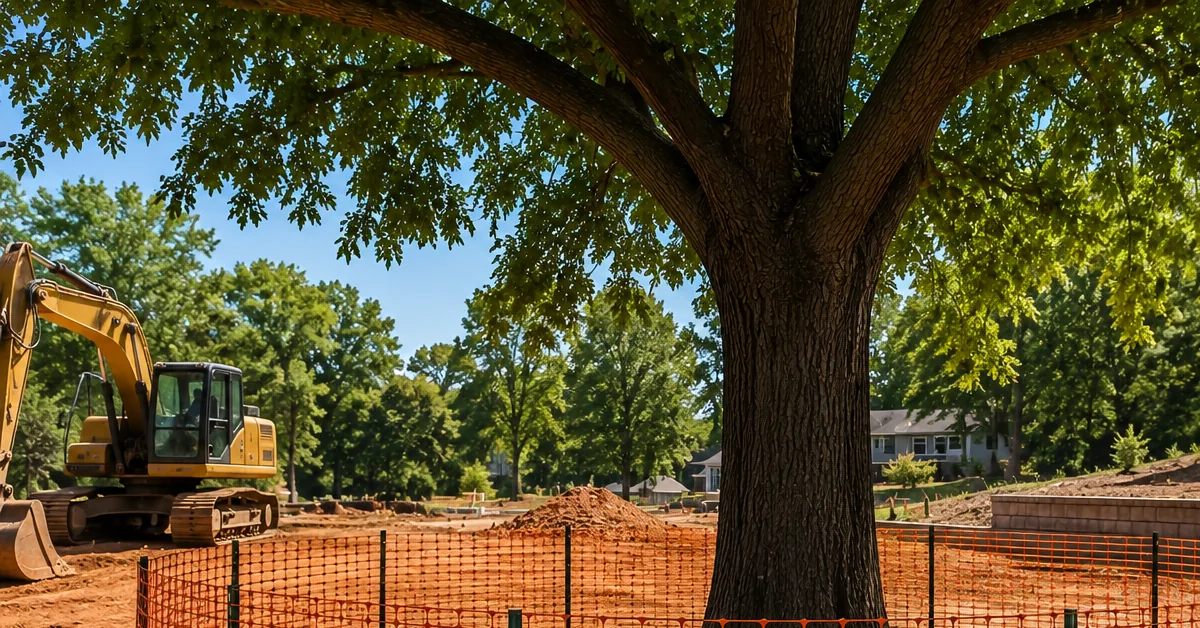
Metro’s Urban Forestry inspection checks whether a completed project matches its approved landscape plan, including tree density, plant species, and whether any protected trees were preserved as promised. The most common reason projects fail is starting grading work before Urban Forestry inspects the required tree protection fencing.
If you’re building anything in Davidson County beyond a single-family or duplex home, a subdivision, an addition that triggered a new site plan, a multi-family or commercial project, Metro Codes’ Urban Forestry Division is going to inspect your site twice. Once before you touch the dirt, and once after the building is done. Miss the first one, and the second one gets a lot harder.
| Stage | What Happens | Timing |
| Landscape plan review | Urban Forestry reviews and approves the plan and Tree Density Worksheet | Before a building permit is issued |
| Pre-grading inspection | Fencing checked against the approved plan | Before any grading or excavation begins |
| Construction | Root zones stay protected, no staging or trenching inside fencing | Throughout the build |
| Final inspection | Completed site checked against the approved plan | After construction wraps |
Who This Actually Applies To
Metro’s landscape plan requirement kicks in for developments other than single- family or duplex residential properties. In practice, that means subdivisions, multi-family buildings, commercial projects, and any residential project that isn’t a standalone single-family or duplex lot. If that’s your project, you need an approved landscape plan, including a completed Tree Density Worksheet, before Metro will issue a building permit.
Step 1: The Landscape Plan, Before You Get a Building Permit
Before you can pull a permit, Urban Forestry needs to review and approve a landscape plan showing perimeter and interior landscaping, buffer yards, and how you’ll meet the site’s required tree density. If you’re planning to count existing trees toward that requirement instead of only new plantings, they need to be identified and protected on the plan. This is the piece that trips people up later.
A few submission details worth knowing upfront:
- Bring three copies of the landscape plan, including the completed Tree Density Worksheet.
- Projects over 5,000 square feet need a professional stamp on the plan.
- Include all proposed and existing overhead utilities, parking lot lighting, detention facilities, easements, and finished topography. An incomplete plan just means a second submission and a delayed permit.
- Use only trees and shrubs from the Urban Forester’s recommended list. Prohibited species won’t count toward your density requirement even if planted.
Step 2: Tree Protection Fencing, Inspected Before Grading
This is the step that causes the most avoidable delays, and it deserves its own heading because of how often it gets skipped.
Any tree you’re counting as retained toward your density requirement has to be physically protected before construction disturbs the site. The standard is 4-foot chain link fencing installed at the tree’s drip line, or at a minimum 10-foot radius from the trunk, whichever gives the root zone more room.
Here’s the part that matters most. That fencing has to be inspected by Urban Forestry personnel before grading begins. If grading starts first, Metro doesn’t just issue a warning. The project is required to submit a revised landscape plan, because the city can no longer verify the tree was actually protected as promised. That’s a real schedule hit, not a paperwork formality.
The fix is simple in theory and easy to forget in practice: install the fencing, call for the pre-grading inspection, get it signed off, and only then bring in the heavy equipment.
Step 3: Keeping Protected Trees Alive Through Construction
A tree that survives the bulldozer but dies six months into the project from compacted soil or root damage doesn’t count either. A few things matter here.
Don’t stage materials, park equipment, or stockpile soil inside the fenced protection zone. Compaction damages roots even without a single branch being touched.
Don’t trench for utilities through the critical root zone if it’s avoidable. Route around it or consult the Urban Forester about alternatives.
Keep the fencing up for the full duration of construction, not just the early grading phase. A tree that gets fenced, then unfenced once framing starts, is exposed for the rest of the project.
Step 4: The Final Urban Forestry Inspection
After construction wraps, Urban Forestry inspects the completed site against the approved landscape plan. The inspector checks whether the site actually matches what was promised on paper: the right species, the right quantities, the right density, and whether any protected trees survived construction in genuinely healthy condition, not just standing, but healthy.
Why Projects Fail This Inspection
The recurring patterns, in order of how often they show up:
- Grading happened before the tree protection fencing was inspected, forcing a revised plan mid-project.
- Protected trees died or were visibly damaged during construction, usually from equipment staging inside the root zone rather than from direct tree removal.
- Substituted species that weren’t on the approved plant list, planted to save money or because the specified species wasn’t available.
- Tree density shortfall, where the finished site doesn’t hit the required density factor, often because retained trees didn’t survive.
- Missing professional stamp on a plan over 5,000 square feet, caught late in the process rather than at submission.
Any one of these means another site visit, another delay, and in some cases a requirement to plant replacement trees to close the gap.
| Stage | Inspection | Common Mistake |
| Before permit | Landscape plan review | Incomplete plan, missing utilities or topography |
| Before grading | Fencing inspection | Grading starts before the inspection is scheduled |
| During construction | No formal inspection, but violations are visible later | Equipment or materials staged inside the root zone |
| After construction | Final inspection | Substituted species or a density shortfall |
Expert Tip: Schedule the pre-grading fencing inspection several days before excavation is planned to start, not the same week. Inspector availability varies, and a delay here pushes the entire schedule back.
A First Pass Compliance Checklist
- Landscape plan submitted with completed Tree Density Worksheet, three copies
- Professional stamp included if the project exceeds 5,000 square feet
- Only recommended species used, no prohibited species on the plant list
- Tree protection fencing installed at drip line, or 10-foot radius minimum, for every retained tree
- Pre-grading inspection requested and passed before any grading begins
- No equipment staging, material storage, or trenching inside protected root zones for the full construction period
- Fencing maintained through the entire build, not removed early
- Final inspection requested once landscaping is complete and matches the approved plan
Frequently Asked Questions
Do I need a landscape plan for a new single-family home in Nashville?
Generally no. Metro’s landscape plan requirement applies to developments other than single-family or duplex residential properties. Standalone single-family and duplex builds are typically exempt.
What happens if grading starts before the tree protection fencing is inspected?
Metro requires a revised landscape plan, since the city can no longer verify the tree was protected as required. This typically causes a real delay, not just a paperwork correction.
How is tree protection fencing supposed to be installed?
As 4-foot chain-link fencing at the tree’s drip line, or at a minimum 10-foot radius from the trunk, whichever provides more root protection, installed and inspected before any grading begins.
What size project needs a professional stamp on the landscape plan?
Projects greater than 5,000 square feet require a professional stamp on the submitted landscape plan.
What does the final Urban Forestry inspection actually check?
Whether the completed site matches the approved landscape plan: correct species, correct quantities, required tree density met, and whether any protected trees survived construction in healthy condition.
Why Skipping Steps Costs More Than You Think
A revised landscape plan is more than a paperwork issue; it can delay construction while new plans are prepared, reviewed, and approved, leaving crews and equipment waiting. Failing the pre-grading fencing inspection can also lead to additional site visits, replacement planting requirements, and unnecessary project costs. Getting tree protection right before grading begins is almost always faster and more cost-effective than correcting problems later.
At Chop Nashville, we’ve seen that the projects most likely to pass Metro’s Urban Forestry inspections are the ones where tree preservation is built into the construction schedule from day one. Walking the site before grading starts, identifying trees that can realistically be preserved, and installing proper protection fencing before heavy equipment arrives can prevent many of the issues that lead to delays and compliance problems.
The takeaway is simple: treat the pre-grading fencing inspection as a required project milestone, not a last-minute task. A little planning upfront helps protect valuable trees, keeps your project on schedule, and makes the final Urban Forestry inspection far more likely to go smoothly.